|
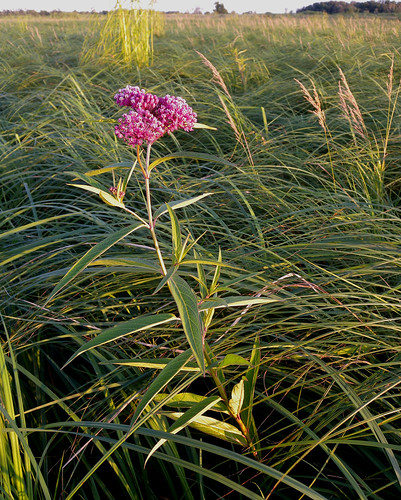
| Marsh or Swamp Milkweed (Asclepias incarnata) |
I have been staying away. I've been there for quick visits many times this summer, but I’ve been away too long. Before I step from the car the welcome committee arrives: first deer flies swarm around the car, and then the mosquitoes land on the glass and prepare to pounce. I take a deep breath, tuck my nose under my shirt and spray my arms and neck with OFF. I step out of the car and gasp for air and rub a little of the insect repellent on my face. The deer flies have formed a cyclone over my head. I spray my hair. I am now good and tacky and ready for adventure. The deer flies land periodically, but take flight as soon as they touch down. For the rest of this trudge my defenses will be constantly tested and the chinks in my armor found and exploited. For now I can largely ignore the swarm of female insects that want to call me dinner.
I strap on my backpack, weighed down with camera gear. It is a movement of hope, much like buying a lottery ticket. I don’t know if I’ll have a dry place to set it down when I’m out there, and so I don’t know if the 40 lbs is worth the effort. I grab my walking stick for balance. I head out and walk through a thick stand of reed canary-grass. It is an invasive species and a plague on our wetlands. I push back the tall grass to look and see if there are any species growing down there. There are none. Mosquito in my armpit, I push through another 100 feet and I’m in those grass-like sedges, a few grasses, flowers and shrubs. This isn’t the diversity of the Amazon, but it is amazing in its own way and much better than the one species of grass just a few paces behind me. If I should fall asleep for a year I would wake up surrounded by reed canary-grass as it advances and smothers this marsh. I try to focus on the positive, sedges are at my feet and the sweet-smelling marsh milkweed is under my nose and a deer fly is up my sleeve. Oh…positive thoughts. There are short, fat, pale-green grasshoppers with comical expressions looking up from the sedges.
 |
| Wool-grass (Scirpus cyprinus) |
The sun is low on the horizon, there is no place to set down the camera bag, so I head west back to the car to maybe catch the sunset over there. The return walk is like walking up rapids of a trout stream. The prevailing winds have bent the sedges and grass toward me and now they provide stiff resistance. Soon I the sweat beads on my face, the beads run together, and steady drip into and out of my eyes flow. I huff and puff my way along, my back is soaked and the mosquitoes are watching the DEET drip off my body. They rejoice when I take the back pack off and expose my unsprayed t-shirt, which they drill through immediately. I set up the big camera and take some photos of the sun going down. The sunset is pretty, but it doesn’t knock my socks off. I turn around 180 degrees and see the cloud formations behind me are quite striking. I set up and take their picture, pack up and drive home trough a rain of insects pelting the windshield. As I approach Oshkosh, the fields and marshes have been decorated by thousands of flashing lightning bugs. I pull off the road to listen to the tree frogs and watch the show. There are no mosquitoes. I think they are watching the show too.