 |
| Lake Winnebago Lake Flies on the radar |
Showing posts with label Lake Winnebago. Show all posts
Showing posts with label Lake Winnebago. Show all posts
Tuesday, May 21, 2013
Lake Winnebago Lake Flies 2013
I snapped this screen shot from my iphone of the radar over Lake Winnebago on May 20, 2013. The "rain" that appears over Lake Winnebago is most likely a cloud of emerging lake flies. This has been seen on radar before, so it's likely this is the same phenomenon. The cloud to the southeast is actually rain.


Saturday, February 16, 2013
A Few Photos from this Winter.
The first real snow of the 2012-2013 winter season in Northeast Wisconsin brought snow that stuck to everything. It was really unusual in that the snow stayed stuck for weeks because of cold weather that immediate followed the snow fall.
 |
| Moody Morning Lake Winnebago Panoramic |
 |
| Willow |
 |
| Snowy Marsh |
 |
| Snowy Boathouse Wall |
Thursday, January 24, 2013
The Power of Ice
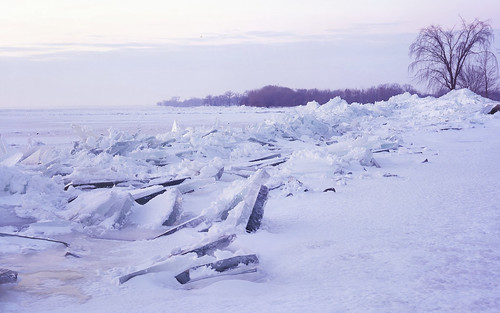 |
| 2010 ice shove on Lake Winnebago, Oshkosh WI |
In Wisconsin we should know better, but we forget that ice
is power. Our lakes like to remind us of
this, with crystalline beauty and crushing power of ice with wind at its back. Winnebago was gouged out by the Green Bay Lobe
of the Wisconsin Glacier. That sheet of
ice made the bathtub that is our lake, and as the ice sat there it dammed what
we know as the Fox River and created glacial Lake Oshkosh which spread across
the landscape. As fine sediment dropped
out of the water of that lake, it created a flat lake bed of clay and silt
which is what Oshkosh and much of Winnebago County is. My house is on the bottom of a lake. When the glacier receded, Glacial Lake
Oshkosh drained out the Fox River to Lake Michigan, and the deep basin filled
up as Lake Winnebago, and so the landscape we know was formed.
The ice on the lake this winter is barely a foot thick child
of the mile high monster that carved out the lake, but it is still a force to
be respected. Water has the most
peculiar of traits. As it forms a solid
by cooling it gets larger, unlike everything else we experience. It only expands a little, but over the span
of miles it adds up. It also expands
with tremendous force. Think of the
expansion of water into ice bursting through iron pipes. Ice is a nearly unstoppable force to be
reckoned with.
Ice can be brutal, but to many it is a source of delight as
it is danger. Snowmobiling, ice fishing,
walking, ice skating, hockey, or just running and sliding are a few of the activities
to enjoy on the ice. Ice provides
everyone access to the lake. Fishermen
without boats are no longer confined to the shore, docks or bridges. They can wander out onto the lakes with a
bucket and the most simple of fishing gear. Ice does not discriminate based on one’s
economic standing. Thin ice or cracks
can swallow up an SUV or a person on foot just as easily, and every year
someone goes down and all too often does not come back up.
 |
| Little icebergs, Lake Winnebago Oshkosh, Wi |
Like everything to do with lakes, ice is controversial. For over a hundred years the water level of
the Winnebago system is drawn down throughout the winter to make way for the
snow smelt and spring rains. This also
has the perceived benefit of reducing ice damage. While there may be some benefits to shore protection
from ice expansion it does little to prevent damage from ice shoves. Ice shoves on Lake Winnebago can climb uphill,
reaching spectacular heights in no time with the right wind, and like miniature
glaciers bulldoze everything in their path.
The dams that control water levels cannot physically draw the lake down
far enough to prevent this damage, and if they could there would be severe
damage to habitat that fish and wildlife depend on.
On calm nights with the temperature dropping you can hear
the ice boom as it contracts and cracks.
Walk along the shore of Menominee park if you are unsure of the ice on
one of these nights and you can hear the power building. The ice is restless. The constant shifts of temperature changes,
the sun, and the wind are always weakening the ice even as it gets
thicker. It can take months for ice to
be thick enough to support the weight of a car, but in a few short weeks it
degrades and piles up on shore. Lake ice
is something of a troubled teenager struggling to be noticed as it makes its
way in the world in the shadow of a famous parent. It throws tantrums, creates trouble, and then
burns out, ends up in rehab, builds up to something delightful, and throws
another tantrum.
Previously published in the Oshkosh Scene.
Previously published in the Oshkosh Scene.
Tuesday, January 8, 2013
Under a Frozen World
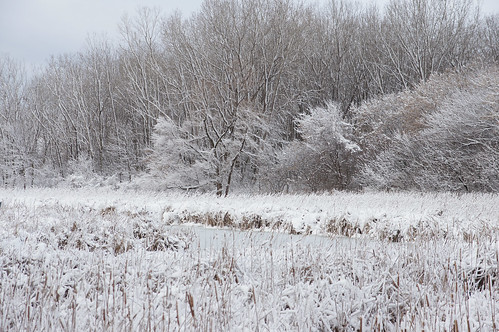 |
| Slough off North Asylum Bay |
Tunneling through the snow are a number of little mammals. Mice, voles, and shrews enjoy the relative
safety provided by their tunnels. There
they are free from the piercing eyes of hawks, but are still vulnerable to the
ears and talons of great-horned owls and pouncing foxes.
On the lake bottoms are the flying insects of summer. The billions of lake flies of spring are all
there as the larva called bloodworms. Keeping company with sediment, decaying plants, and rocks are the larvae of caddisflies, damselflies, dragonflies, and mayflies that will emerge from the lake and take flight in spring and summer. All of these are food throughout the winter
for bluegills, perch and other fish.
Up the food chain there are reptiles we envision hibernating
in the mud. Some turtles and frogs are
indeed buried in the mud, but others are piled up sitting on the lake bottom
motionless or crawling along at a snail’s pace.
Common map turtles sit on the bottom or wedge themselves amongst rocks
and logs. When disturbed they retreat,
and may reveal a northern leopard frog underneath, which will also swim
away. Hardly asleep, these map turtles
require more oxygen than painted turtles buried in the sometimes anoxic mud. The cold and relative inactivity allows them
to take in all the oxygen they need from water.
Frogs and softshell turtles breathe through their skin, but softshells
also take in oxygen through special adaptions in their throats.
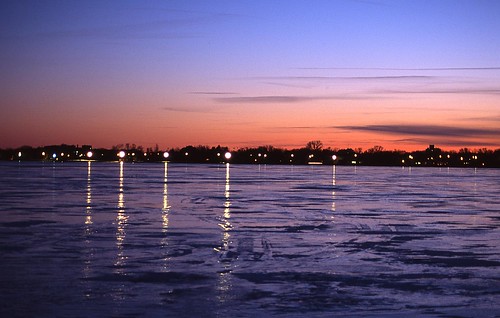 |
| Frozen Lake Winnebago at Oshkosh |
Mammals have no options but to breathe air. The local aquatic members of the weasel family--river
otter and mink--must maintain holes in the ice with their teeth to be able to
gain access to the fish, frogs, turtles and other animals they eat. Muskrats often use the same holes, but they
try to stay concealed, and will never walk on ice and snow if they can avoid
it. Muskrats build huts, or lodges like
beavers do, but muskrat homes are made of aquatic plant leaves, stems, and
roots. Here they sleep and eat, but they
often swim far beyond the range of one breath to obtain the food they
need. For those foraging trips they
build cave-like “push ups” for breathing.
They will also build small feeding huts, which are self-explanatory. A sudden drop in water levels after the ice
forms seals off all these structures from the muskrats’ food, forcing them onto
ice and snow and into the jaws of coyotes.
Winter is a harsh time for wildlife, but it can be easier
under the ice and snow for those adapted to it.
Previously published in the Oshkosh Scene article.
Previously published in the Oshkosh Scene article.
Sunday, December 18, 2011
Ice Returns

 |
| Duck weeds and water meal locked in ice |
Subscribe to:
Posts (Atom)